Downloadable
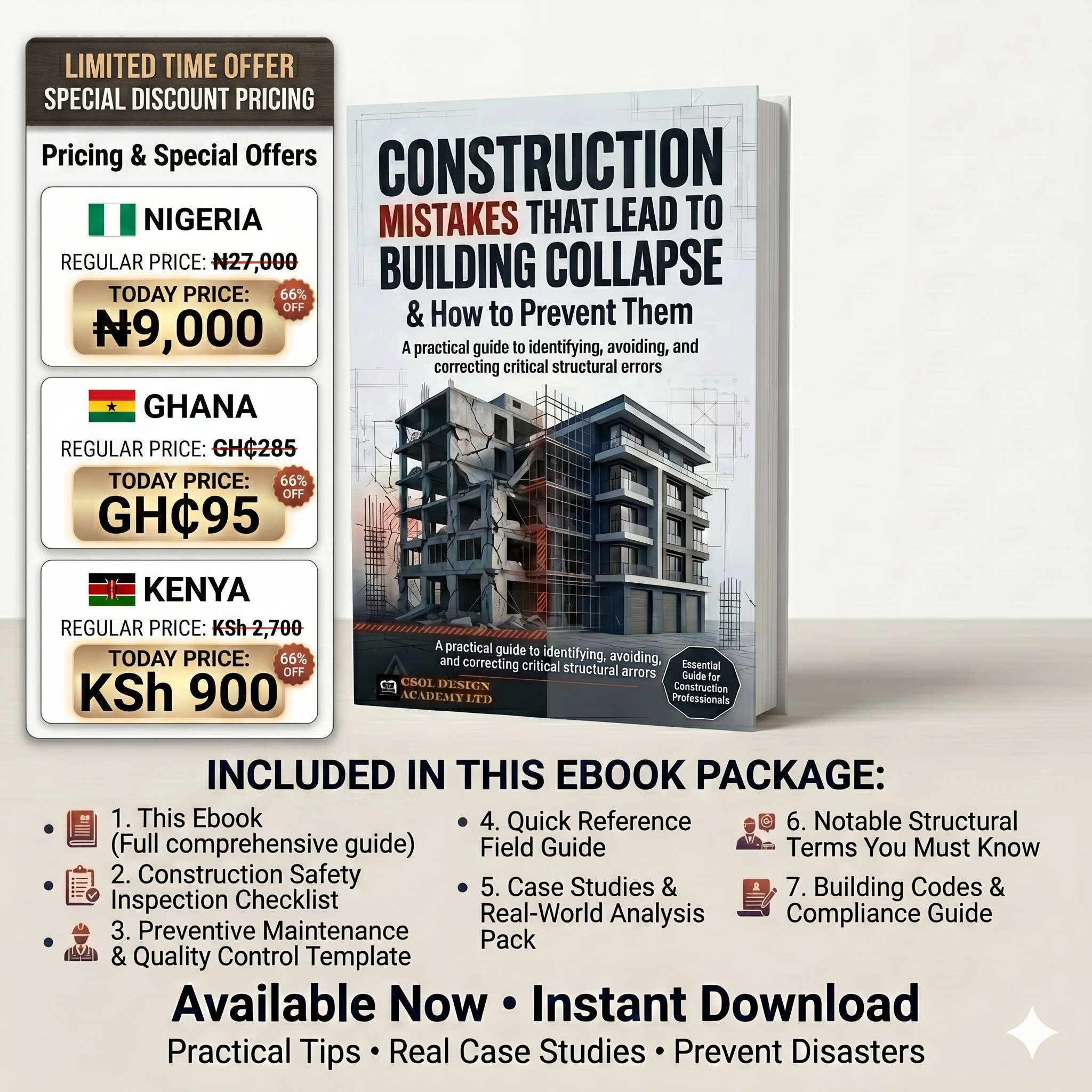
Construction Mistakes That Lead to Building Collapse & How to Prevent Them (EBOOK)

(0 Ratings)
1
$5.00$30
CONSTRUCTION MISTAKES THAT LEADS TO BUILDING COLLAPSE & HOW TO PREVENT THEM.
Avoid costly and dangerous errors that can turn a construction project into a disaster. This powerful guide reveals the most common mistakes responsible for building failures, from poor foundation practices to material misuse and weak structural planning and shows you exactly how to prevent them. Whether you're an architect, builder, contractor, or homeowner, this eBook equips you with practical knowledge, real-world insights, and proven strategies to ensure every project is safe, durable, and built to last. Don’t risk your reputation, investment, or lives, learn how to build right the first time.
WATCH VIDEO BELOW TO PREVIEW THE BOOK/
TABLE OF CONTENT.
PART I — Understanding Building Collapse
Chapter 1: What Building Collapse Really Means
- Definition of Structural Failure
- Types of Building Collapse
- Progressive vs Sudden Collapse
- Economic and Human Consequences
- Global and Developing-Nation Perspectives
Chapter 2: Anatomy of a Safe Structure
- Load Paths Explained Simply
- Structural Systems in Buildings
- Role of Foundations, Columns, Beams, and Slabs
- Safety Factors in Structural Engineering
- Why Small Errors Become Major Failures
Chapter 3: Common Patterns Behind Collapse Incidents
- Recurring Industry Mistakes
- Warning Signs Often Ignored
- Human Factors in Structural Failure
- Lessons from Real-Life Collapse Cases
PART II — Design & Engineering Mistakes
Chapter 4: Structural Design Errors
- Incorrect Load Calculations
- Poor Structural Modeling
- Under-Designed Structural Members
- Ignoring Future Load Changes
- Prevention Strategies for Designers
Chapter 5: Foundation Design Failures
- Inadequate Soil Investigation
- Wrong Foundation Selection
- Differential Settlement Problems
- Groundwater Effects
- Foundation Design Best Practices
Chapter 6: Architectural Decisions That Compromise Safety
- Excessive Cantilevers and Overhangs
- Irregular Building Shapes
- Open Ground Floor (Soft Storey) Risks
- Poor Space Modifications
- Engineer–Architect Coordination
PART III — Material-Related Construction Mistakes
Chapter 7: Use of Substandard Construction Materials
- Low-Quality Cement and Aggregates
- Reinforcement Steel Defects
- Counterfeit Building Materials
- Improper Material Storage
- Material Verification Procedures
Chapter 8: Concrete Production and Placement Errors
- Incorrect Mix Ratios
- Poor Batching Practices
- Inadequate Compaction
- Improper Curing Methods
- Quality Control Checklists
Chapter 9: Reinforcement and Structural Detailing Mistakes
- Wrong Bar Placement
- Insufficient Concrete Cover
- Poor Anchorage and Lapping
- Site Alterations Without Approval
- Detailing Inspection Guidelines
PART IV — Construction & Workmanship Failures
Chapter 10: Poor Workmanship on Construction Sites
- Unskilled Labor Risks
- Improper Formwork Installation
- Construction Sequence Errors
- Lack of Site Discipline
- Contractor Quality Control Systems
Chapter 11: Site Supervision and Project Management Failures
- Absence of Professional Supervision
- Communication Breakdown Among Teams
- Cost-Cutting Decisions
- Schedule Pressure Risks
- Effective Supervision Framework
Chapter 12: Unauthorized Modifications During Construction
- Structural Changes Without Analysis
- Additional Floors and Load Increase
- Removal of Structural Elements
- Case Studies of Modification Failures
PART V — Regulatory & Environmental Factors
Chapter 13: Regulatory Violations and Approval Failures
- Building Code Noncompliance
- Lack of Permits and Inspections
- Corruption and Enforcement Gaps
- Responsibilities of Authorities
- Compliance Best Practices
Chapter 14: Environmental and Site Conditions
- Flooding and Water Damage
- Soil Erosion and Landslides
- Wind and Seismic Effects
- Climate Impact on Structures
- Designing for Environmental Safety
PART VI — Occupancy, Maintenance & Aging Structures
Chapter 15: Post-Construction Neglect
- Lack of Building Maintenance
- Water Leakage and Structural Damage
- Corrosion of Reinforcement
- Structural Fatigue Over Time
Chapter 16: Dangerous Building Usage Practices
- Overloading Buildings
- Change of Building Use
- Equipment and Storage Loads
- Occupant Awareness
Chapter 17: Inspection and Structural Health Monitoring
- Routine Inspection Methods
- Non-Destructive Testing Techniques
- When to Call a Structural Engineer
- Building Safety Audit Procedures
PART VII — Prevention Strategies & Professional Best Practices
Chapter 18: Designing Collapse-Resistant Buildings
- Safety-Based Design Principles
- Redundancy in Structural Systems
- Risk Management in Engineering
- Modern Engineering Technologies
Chapter 19: Construction Quality Assurance Systems
- Site Quality Management Plans
- Material Testing Protocols
- Documentation and Reporting
- Contractor Accountability Systems
Chapter 20: Early Warning Signs Every Stakeholder Must Know
- Visible Structural Distress Indicators
- Cracks and Settlement Signs
- Structural Movement Symptoms
- Emergency Response Actions
PART VIII — Practical Guides & Expert Tools
Chapter 21: Safety Checklists for Construction Projects
- Pre-Construction Checklist
- Foundation Stage Checklist
- Structural Frame Checklist
- Pre-Occupancy Safety Checklist
Chapter 22: Guidance for Homeowners and Developers
- Hiring Qualified Professionals
- Questions to Ask Before Building
- Avoiding Cheap Construction Traps
- Protecting Your Investment
Chapter 23: Lessons from Real Building Collapse Case Studies
- Design Failure Case Study
- Material Failure Case Study
- Supervision Failure Case Study
- Key Preventive Lessons